Currently there are no notifications.
Safety screws - Tamper-proof screws
Screw connections can be detached independently or detached without authorization by third parties. In order to prevent this, so-called Safety screws have been developed that make it difficult or impossible to manipulate screws. In addition to safety screws with special screw heads or screw drives, there are also other design options. In this article you will find everything necessary to protect your screw connection from theft or tampering in the future.
What is a safety screw?
Safety screws have special screw head profiles or screw drive shapes that can only be opened with a special tool that is not generally available. These theft-resistant screws are also called tamper-resistant screws. Some safety screws are designed so that they cannot be removed without destruction after assembly. These screws are called tamper-proof.
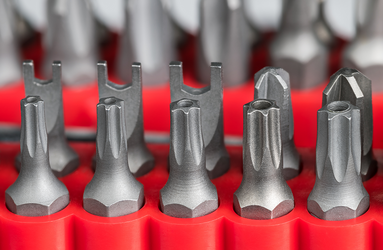
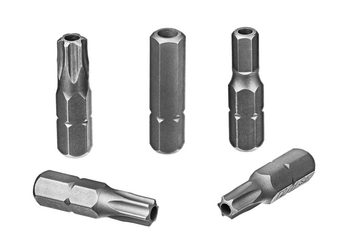
In contrast to the standardized screws covered in this overview, safety screws usually do not correspond to DIN or ISO. Established screw standards generally only take into account common drive shapes. Safety screws are still considered “DIN-like” because the basic dimensions comply with DIN standards, but they are equipped with different head or drive shapes.
Although safety screws are generally considered very safe, it is important to note that no screw is absolutely non-detachable. With the appropriate expertise, special tools or using force, safety screws can also be removed.
Tamper-resistant screws
There are a variety of anti-theft screws that can usually be distinguished by the shape of their special drive.
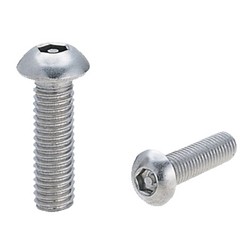
Anti-theft pin screws have an internal drive screw head with a small pin in the center. This allows them to be loosened only with a special screwdriver. Alternatively, the bolt can be removed to then loosen the screw using conventional tooling. The bolt must be broken out.
In the so-called With the snake-eye drive, also known as the two-hole drive, the screw head has two round recesses. The special drive of a two-hole screw is not one of the common screw drives, such as slotted drive, Phillips drive, or hex socket drive. This reduces the likelihood that the corresponding tool will be available to loosen it in the event of theft or manipulation.

Other screw drives with a tamper-resistant function include:
- Triwing or Trilob drive: This three-wing drive can only be operated with special tools.
- Hex with pin / hex round with pin: There is a central pin in the drive that excludes the use of traditional bits and can only be opened with safety bits.
- System 5 drive: This 5-star drive cannot be removed with conventional tools. Special tools such as a System 5 bit are required. In some models, there is also a pin in the center.
- Triangular head: This triangular head can also only be removed with special tools. They are often used in public transport.

In general, the correct tightening torques must also be observed to ensure that the screws are securely seated. You can find out how these are calculated in our article Calculating tightening torques for screws - What role does resilience play?.
Tamper-resistant screws
Tamper-resistant screws include, for example, carriage bolts, screws with a tear-off head, or one-way screws. The screw head of one-way screws, usually a slotted drive, can only be screwed in one direction (to the right). Standard tools will slip off when attempting to unscrew the screw head in the opposite direction. A special tool is required for loosening. One-way screws should therefore be used primarily only in applications where no components need to be replaced.

Another example of tamper-resistant screws is break-off screws or Screws with break-off head. With these screws, the screw drive has a predetermined breaking point that breaks during tightening. The remaining screw is one that cannot be unscrewed with any tool without destroying it.
The carriage bolt is also a tamper-resistant screw. Its head shape is mushroom-shaped and therefore does not provide a holding surface for a tool. Under the head lies a square neck, which prevents the screw from turning when the nut is tightened by means of a positive locking mechanism. This creates a secure connection.

Other types of screw locking
To make screws theft-proof, various screw locks and locking elements are also available in addition to special screw heads. These not only prevent unauthorized loosening, but also ensure that the screw is not lost after loosening.
Screw locks to prevent self-loosening
If screws are likely to loosen on their own during use, it is recommended to use a screw lock. There are four types of screw locking:
- Settling locks
- Loss prevention
- Anti-rotation locks
- Combination of the three variants
The settling lock increases the elasticity of the joint and compensates for settling effects, thus largely maintaining the preload force. They act like a compression spring and help maintain the clamping force, preventing the joint from loosening on its own. However, they cannot prevent loosening during forced relative movements of the components.
The loss-prevention lock allows partial loosening but prevents complete disassembly of the joint. They are used when loosening the screw has no serious consequences, but a loss of the screw should be avoided. The thread lock is, for example, a type of loss-prevention lock in which a plastic thread is inserted into a milled groove on the screw and is clamped between the threads when screwing in. The clamping effect ensures that the screw position is maintained.
The anti-rotation lock prevents the joint from loosening on its own by preventing relative movements between the screw and the component. This is often achieved by form-fitting elements, such as locking teeth or ribs, that create a positive fit.
Screw locking with adhesive
Another proven type of screw locking is the use of adhesive. The adhesive is inserted into the gap between the threads and thus prevents movement of the screw after curing. The adhesives are anaerobic, i.e., they cure in the absence of air when in contact with metal directly on-site, thus ensuring that the preload force is maintained. Thanks to their properties, they also protect against corrosion. Depending on the application, there are different levels of strength: from easily removable to high-strength, permanent joints.
The screw lock with adhesive is originally intended as a safeguard against the screw loosening on its own. However, loosening without heating or damaging the screw or threads is usually not possible, even with suitable tools, for high-strength variants, which is why this type can also be used as an anti-theft screw connection with suitable adhesive.
Securing elements against unauthorized loosening
Screw connections can also be protected from theft and tampering by inserting external securing elements. One way is to add an impact star to the safety screws. The impact star is driven into the screw drive for e.g. hexagon socket screws and can only be removed by drilling.
Screws can also be provided with a shear nut. Shear nuts are regular nuts attached to a spherical base. When a constructively defined torque is reached, the nut breaks off at the predetermined breaking point and the spherical shape remains, which cannot be unscrewed with any tool without causing damage. Other possible locking elements may include locking pins, spring cotters, or cotter pins. To learn more, check out our article Locking Pins.
Another option is to use sealing lacquer. For this purpose, a cap with an opening between the screw head and the component is inserted before screwing the screw. The sealing lacquer is then poured into the opening to cover the entire screw head. Unscrewing is no longer possible with a simple tool. Any attempted manipulation also leaves clear marks.
Almost any screw can be secured against unintentional loosening by using a suitable locking nut. This method is simple and effective, but does not protect against manipulation. For applications requiring special protection, there are therefore tamper-proof special forms of lock nuts. This includes, for example, anti-theft nuts with smooth or round outer surfaces that can only be installed and removed with a special tool. These nuts specifically prevent the use of conventional tools such as open-end or socket wrenches.
Another example of locknuts is castle nuts, which stand out because of their ring-shaped notches. In combination with a cotter pin, which is passed through a transverse hole in the screw, these nuts can be mechanically secured against twisting. This alone does not yet constitute tamper protection. However, if the slotted nut is installed on the inaccessible side, it will reliably prevent the screw from loosening.

Other applications for screw locking devices
We have already considered tamper-resistant screws as effective anti-theft protection. Their use is also useful wherever unauthorized intervention, unintentional loosening or security risks due to tampering are to be prevented. This applies in particular to safety-critical systems in industry, medical technology or mechanical engineering, in which protection against external access is part of the safety concept.
In addition, tamper-resistant screws offer advantages in applications in vandal-prone areas, such as urban areas or publicly installed infrastructure elements (e.g. ticket machines or lighting systems).