Currently there are no notifications.
Cylinder pins / tension pins / offset pins - presentation of DIN and ISO standards according to form
Cylinder pins and tension pins are connecting elements for mechanical components. Standards and norms, such as DIN EN ISO 2338 or ISO 8734 for cylindrical pins or DIN EN ISO 8752 for spring pins, define geometry, tolerances, and application areas. Particularly in mechanical engineering, pinning is a reliable method for connecting components permanently and free of play without having to use screw connections. In this article, we look at different forms of connecting pins and their standardization. We also discuss chamfers and surface finishes. In addition, we present differences in standardization and what you need to consider if you want to use pins with different standards.
What are cylindrical pins and spring pins?
Pins in general are mechanical fasteners and act similarly to nails. They provide a form-fit and force-fit pin connection between two or more machine elements. How an optimal pin connection can be achieved is explained in our article Pin connection – Connecting components with cylindrical pins – Procedure / Errors.
There are different categories of pins, such as cylindrical pins, locating pins, or spring pins. Cylindrical pins have a simple cylindrical shape with various versions, such as hardened, unhardened, or with and without internal threads. They are manufactured in tolerance classes h8 and m6. A stepped pin is a special form of the cylindrical pin: With the stepped pin, an area of the cylindrical pin has a smaller diameter than the remaining pin. To secure a dowel pin, additional threaded holes, locking rings or form-fit connections can be used, depending on the connection requirements. For more information on circlips, please refer to our article Circlip Type C - Guidelines for Purchasing Circlips.
Spring pins are hollow and slotted, unlike dowel pins. They are made of spring steel, which is why they are used, for example, in holes where they expand due to the spring effect. Spring pins are bent from a sheet metal strip to form a tube. For both spring pins and dowel pins, chamfers at the end of the pin facilitate installation. You can also read a comprehensive introduction to spring pins in our article Spring pins - overview / design / application.
Standard differences between JIS, DIN and ISO
Pins are also subject to standards. This ensures compatibility, quality, and geometric fidelity. However, at an international level, deviations can occur between the different standardization systems despite the almost identical form. The 1988 JIS Standard B 1352 addresses, for example, taper pins or conical pins and distinguishes them based on the surface roughness of the cone in two classes: Class A pins have a surface roughness of 0.8 μm and are made by grinding, Class B pins have a surface roughness of 3.2 μm and are made by turning. JIS B 1352 refers to ISO 2339, which also describes conical pins in the international context, but clearly states that the described pins do not match those of JIS B 1352. Pins according to JIS B 1352 are therefore not easily interchangeable with dowel pins according to DIN 7 or ISO 2339 or 2338 without design changes. This is different for pins according to DIN 7. Since DIN 7 has been incorporated into DIN EN ISO 2338, these are interchangeable.
The following table provides an overview of the common JIS standards according to the current status:
| Sketch | Standard / Norm | Name DE | Name EN |
|---|---|---|---|
 |
JIS B 1354 - Form A (1988) | Zylinderstifte | Parallel pins |
 |
JIS B 1354 - Form B (1988) | Zylinderstifte | Parallel pins |
 |
JIS B 1354 - Form C (1988) | Zylinderstifte | Parallel pins |
 |
JIS B 1352 (1988) | Kegelstifte (Kegel 1:50) | Taper pins |
 |
JIS B 1355 (1990) - Form A | Zylinderstifte (gehärtet) | Parallel pins |
 |
JIS B 1355 (1990) - Form B | Zylinderstifte (gehärtet) | Parallel pins |
 |
JIS B 1355 (2012) | Zylinderstifte (gehärtet) | Dowel pins / Parallel pins |
The differences in the standards are the result of various industrial requirements and historical developments. There are similar differences, for example, with hexagon socket screws. Primarily, JIS B 1352 is a Japanese standard and takes into account the manufacturing standards that are common there. Many DIN standards have been incorporated into ISO standards as part of international standardization efforts. ISO standards such as ISO 2338 and 2339 replace older German standards such as DIN 7 and in some cases form the basis for global standards applicable in Europe (EN ISO). If the validity of the EN standard is also adopted in a single country, it is then designated, for example, as DIN EN ISO in Germany.
However, there are also differences between DIN 7 and ISO 2338: While DIN 7 describes cylindrical pins with rounded ends (chamfer or half radius), ISO 2338 specifies pins with flat end faces. As a result, both standards differ in the end geometry and insertion characteristics, which must be taken into account during the assembly and fit of the pin connection. In practice, however, these differences have little negative effect because the pins are functionally identical in most applications and can usually be used interchangeably without problems. The following table provides an overview of other national and international standards for various pin categories:
| Sketch | Standard / Norm | adopted in DIN EN | corresponding international standard | Name DE | Name EN | |||||||||||||||||||||||||||||||||||||||||||||||||||||||||||||||||||||||||||||||||||||||||||||||
|---|---|---|---|---|---|---|---|---|---|---|---|---|---|---|---|---|---|---|---|---|---|---|---|---|---|---|---|---|---|---|---|---|---|---|---|---|---|---|---|---|---|---|---|---|---|---|---|---|---|---|---|---|---|---|---|---|---|---|---|---|---|---|---|---|---|---|---|---|---|---|---|---|---|---|---|---|---|---|---|---|---|---|---|---|---|---|---|---|---|---|---|---|---|---|---|---|---|---|---|---|
 |
DIN 1 ** | DIN EN 22339 | ISO 2339* | Kegelstifte (Kegel 1:50) | Taper pins | |||||||||||||||||||||||||||||||||||||||||||||||||||||||||||||||||||||||||||||||||||||||||||||||
 |
DIN 7 - Form A** | DIN EN 22338 ** | DIN EN ISO 2338 | Zylinderstifte | Parallel pins | |||||||||||||||||||||||||||||||||||||||||||||||||||||||||||||||||||||||||||||||||||||||||||||||
 |
DIN 7 ** | - | - | Zylinderstifte | Parallel pins | |||||||||||||||||||||||||||||||||||||||||||||||||||||||||||||||||||||||||||||||||||||||||||||||
 |
DIN 7 ** | - | - | Zylinderstifte | Parallel pins | |||||||||||||||||||||||||||||||||||||||||||||||||||||||||||||||||||||||||||||||||||||||||||||||
 |
DIN 258 | - | - | Kegelstifte mit Gewindezapfen und konstanten Kegellängen (Kegel 1:50) | Taper pins with thread ends and constant taper lengths | |||||||||||||||||||||||||||||||||||||||||||||||||||||||||||||||||||||||||||||||||||||||||||||||
 |
DIN 1471 ** | DIN EN 28744 ** | DIN EN ISO 8744 | Kegelkerbstifte | Full-length taper grooved pins | |||||||||||||||||||||||||||||||||||||||||||||||||||||||||||||||||||||||||||||||||||||||||||||||
 |
DIN 1472 ** | DIN EN 28745 ** | DIN EN ISO 8745 | Passkerbstifte | Grooved Pins, Half Length Taper-grooved | |||||||||||||||||||||||||||||||||||||||||||||||||||||||||||||||||||||||||||||||||||||||||||||||
 |
DIN 1473 ** | DIN EN 28740 ** | DIN EN ISO 8740 | Zylinderkerbstifte | Grooved Pins, Full Length Parallel-grooved with Chamfer | |||||||||||||||||||||||||||||||||||||||||||||||||||||||||||||||||||||||||||||||||||||||||||||||
 |
DIN 1474 ** | DIN EN 28741 ** | DIN EN ISO 8741 | Steckkerbstifte | Grooved Pins, Half Length Reverse-grooved | |||||||||||||||||||||||||||||||||||||||||||||||||||||||||||||||||||||||||||||||||||||||||||||||
 |
DIN 1475 ** | DIN EN 28742 ** | DIN EN ISO 8742 | Knebelkerbstifte | Grooved Pins, Third Length Centre-grooved | |||||||||||||||||||||||||||||||||||||||||||||||||||||||||||||||||||||||||||||||||||||||||||||||
 |
DIN 1481 ** | DIN EN 28752 ** | DIN EN ISO 8752 | Spannstifte (Spannhülsen), schwere Ausführung | Spring-Type Straight Pins (Roll Pins), Heavy Type | |||||||||||||||||||||||||||||||||||||||||||||||||||||||||||||||||||||||||||||||||||||||||||||||
 |
DIN 6325 ** | DIN EN 28734 | Zylinderstifte, gehärtet; Toleranzfeld m6 (abgebildet TYP B) | Parallel Pins, Hardened; Tolerance Zone m6 | ||||||||||||||||||||||||||||||||||||||||||||||||||||||||||||||||||||||||||||||||||||||||||||||||
 |
DIN 7343 ** | DIN EN 28750 ** | DIN EN ISO 8750 | Spiral-Spannstifte, Regelausführung | Spiral Pins; Normal Type | |||||||||||||||||||||||||||||||||||||||||||||||||||||||||||||||||||||||||||||||||||||||||||||||
 |
DIN 7344 ** | DIN EN 28748 ** | DIN EN ISO 8748 | Spiral-Spannstifte, schwere Ausführung | Spiral Pins; Heavy Duty Type | |||||||||||||||||||||||||||||||||||||||||||||||||||||||||||||||||||||||||||||||||||||||||||||||
 |
DIN 7346 ** | - | DIN EN ISO 13337 | Spannstifte (Spannhülsen), leichte Ausführung | Spring-Type Straight Pins; (Roll Pins) Light-weight Type | |||||||||||||||||||||||||||||||||||||||||||||||||||||||||||||||||||||||||||||||||||||||||||||||
 |
DIN 7977 ** | DIN EN 28737 | ISO 8737* | Kegelstifte mit Gewindezapfen und konstanten Zapfenlängen (Kegel 1:50) | Taper Pins with Thread Ends and Constant Point Lengths | |||||||||||||||||||||||||||||||||||||||||||||||||||||||||||||||||||||||||||||||||||||||||||||||
 |
DIN 7978 ** | DIN EN 28736 | ISO 8736* | Kegelstifte mit Innengewinde (Form A - geschliffen- Kegel 1:50)) | Taper Pins with Internal Thread | |||||||||||||||||||||||||||||||||||||||||||||||||||||||||||||||||||||||||||||||||||||||||||||||
 |
DIN 7979 ** | DIN EN 28733 ** | DIN EN ISO 8733 | Zylinderstifte mit Innengewinde und Luftentweichungsfläche (Form C / ungehärtet) | Parallel Pins with Internal Thread | |||||||||||||||||||||||||||||||||||||||||||||||||||||||||||||||||||||||||||||||||||||||||||||||
 |
DIN 7979 ** | DIN EN 28735 ** | DIN EN ISO 8735 | Zylinderstifte mit Innengewinde (Form - D / gehärtet) | Parallel Pins with Internal Thread | |||||||||||||||||||||||||||||||||||||||||||||||||||||||||||||||||||||||||||||||||||||||||||||||
| ||||||||||||||||||||||||||||||||||||||||||||||||||||||||||||||||||||||||||||||||||||||||||||||||||||
For example, the following must be observed in the case of differently standardized pins:
- Tolerances: Dimensional tolerances vary by standard and affect fit.
- Lengths: Spring and cylindrical pins of different standards can be measured differently with the same nominal length (e.g. incl. or excl. chamfer), which may lead to installation problems.
- End shapes: The end shape (e.g. chamfer, rounding, edge) affects the insertion of the pin and, if the shape is incorrectly selected, may lead to a difficult installation.
- Fit to hole: Due to other tolerances, it is possible that a differently standardized pin does not fit into the intended bore.
- Mounting Type: Some pins are designed for driving in, while others are designed for press-fitting under spring action. An incorrect mounting type can damage components or prevent proper functioning.
- Material differences: The required hardness can differ and may no longer be sufficient for the existing installation conditions. However, sometimes the information is identical: For example, both JIS B 1352 and ISO 2339 require a Vickers hardness of 125 to 245 for steel.
Spring pin and dowel pin shapes and variants
Stepped cylinder pins are available in various end shapes and variants, each with specific functions. Internally threaded cylinder pins according to DIN 7979 provide a secure screw connection and facilitate handling, especially during frequent removal. Hardened cylinder pins according to DIN EN ISO 8734 are particularly resistant to wear and better withstand lateral forces. They are often metal fasteners in machines. Cylindrical pins with collar have a stop that limits the installation depth and are used in precision devices. Alternatives such as locking pins provide additional protection through cotter pins and spring clips.
Heavy-duty spring pins according to DIN 1481, as a special form of spring pins, have increased wall thickness and are driven into a precisely matched drilled hole in order to secure components with a friction fit. Their robust design allows them to absorb higher forces than light variants and makes them particularly suitable for dynamically loaded connections.
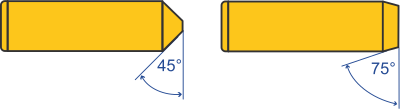
The use of chamfers facilitates the assembly of pins. Typically, chamfers have a 45° angle, but sometimes the angle may vary. DIN 7 refers to a 45° chamfer, for example. The lead-in angle of a 45° chamfer is steeper and the pin tapers more sharply than at a 75° angle. The impact of the pin is therefore more direct. The 75° chamfer described in the JIS B 1354 has a longer starting zone and can be centered a little more gently.
In addition to the surface roughness, which differs depending on the individual manufacturing process, the design of the surface shape can also vary. This is the case, for example, with grooved pins. Grooved pins and grooved nails have multiple pairs of grooved ribs along their circumference. These ribs are pushed back into the grooves when they are driven into a hole, resulting in radial clamping. This secures the pin against vibration. The so-called Countersunk grooved pins and grooved nails, e.g., in DIN EN ISO 8746 and DIN EN ISO 8747. The MISUMI shop has many of the mentioned variants, from standard cylindrical pins to stepped designs and taper pins.