Currently there are no notifications.
Cooling and cleaning in production - Air nozzles and spray nozzles
From machining, to welding processes or along the conveyor. In modern manufacturing, precise cooling and reliable cleaning are essential for quality, process reliability and productivity. Air nozzles and spray nozzles offer flexible solutions - from precise blow-off to liquid surface wetting. In this blog, you will learn which nozzle types are suited for which applications, how jet shape and spray angle impact the effect and what really matters when selecting, designing and integrating into the system.
What are nozzles and how do they work?
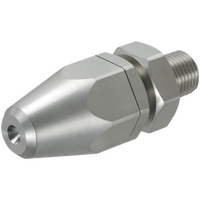
In industrial production, nozzle technology plays a key role in efficiently and purposefully controlling processes such as cooling, cleaning, drying or wetting. As technical components, nozzles shape the jet of air or liquid so that it impacts workpieces, tools or machine components with maximum effect and minimal energy input. In principle, two main types can be distinguished: Air nozzles that operate with compressed air and spray nozzles that atomize liquids. Compressed air nozzles are primarily used for blowing off chips, drying, or spot cooling, while spray nozzles enable targeted distribution of liquids – for example for tool cooling, component cleaning or the application of emulsions.

What is the Bernoulli effect?
A physical effect that plays a key role in both nozzle types is the Bernoulli effect. It describes the relationship between speed and pressure in a flowing medium: The faster a fluid flows, the lower its static pressure.
This effect is used in air nozzles to accelerate air through a constriction and thereby creating a strong, focused airflow – ideal for cleaning or cooling processes. In spray nozzles, in turn, the high flow velocity either ensures the atomization of a liquid or, in so-called two-substance nozzles, a negative pressure that draws in the liquid, mixes it and breaks it up into fine drops. In addition to performing mechanical work, nozzles specifically use fluid-dynamic effects to make industrial processes more efficient, precise and resource-efficient.
What types are there?
In industrial applications, nozzles are used in a wide variety of versions - adapted to various requirements such as cooling, cleaning, wetting or drying. Systematic categorization is useful for selecting the appropriate nozzle for a specific task. Three basic criteria for classification are the atomization behavior, the jet shape and the spray angle. All of these characteristics determine the range, coverage and effect of the medium on the workpiece and are therefore important criteria when selecting a nozzle.
Nozzle Atomization Methods
Atomization methods can generally be divided into single-substance atomization and two-substance atomization. In single-substance atomization, the liquid is forced through the nozzle by its own pressure alone, for example via a pump, and thereby converting it into drops or a spray. The atomization is carried out purely mechanically by the flow velocity and nozzle geometry, without support from air or gas. This process is technically simple, energy-efficient and well suited for applications such as cleaning, cooling or lubrication where a fine mist is not strictly required.

In contrast, two-substance atomization works with two media: a liquid, plus compressed air or a gas that impacts the liquid at or in the nozzle and tears it into the finest droplets. This creates a particularly fine, uniform spray, even at low fluid pressure. Two-substance nozzles are particularly suited for applications where high precision, minimal fluid volumes, or sensitive surfaces are important. While single-fluid nozzles stand out for their simplicity and robustness, two-substance nozzles provide maximum control over droplet size and spray pattern.
Spray behavior of nozzles
The spray pattern describes the geometric shape in which a medium exits a nozzle. It affects how the medium meets the target surface, which surface is covered, and which cleaning or cooling effect can be achieved. To ensure uniform wetting of the surface, the surfaces must be LABS-free. You can learn more about this in our article on paint-wetting inhibiting substances.
Several basic spray patterns have become established in the industrial environment:

A full cone spray evenly distributes the medium over a circular surface. This spray pattern is often used to completely and intensely wet surfaces, for example for surface cooling or uniform application of emulsions.

On a hollow cone spray, the liquid exits in an annular manner and the center of the spray pattern remains free. Due to the fine, uniform mist generated in this way, hollow cone nozzles are particularly well suited for sensitive surfaces or for large-area spraying of small amounts of liquid, for example during cleaning or pretreatment of components.

A point stream is a highly concentrated, narrow jet that strikes a small surface with high force. It is particularly suited for precise blow-off or cleaning tasks, such as removing chips from bores, grooves, or hard-to-reach areas. In addition, a point stream is often used in quality control for the targeted blowing away of reject components from production.

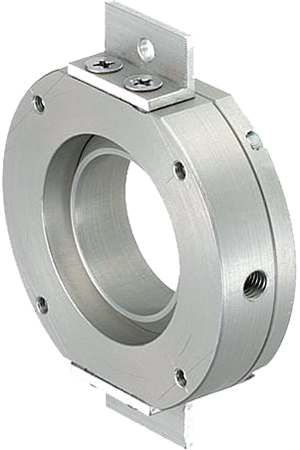
A crown jet or ring jet forms a closed, circular spray pattern that completely surrounds the workpiece. This spray pattern is preferably used when cylindrical or rotating parts are cleaned, cooled, or dried evenly from all sides, such as for shafts, pipes, or bearing parts. The ring jet can also create a circular barrier around a component. This allows the component to be protected against contamination or other contaminants as well as environmental influences.

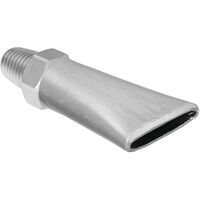
The flat jet - also called a fan jet - generates a broadly fanned-out jet pattern in the form of a narrow line. This spray pattern is often used for surface cleaning or rinsing, for example, when workpieces are treated extensively with water or air. The uniform pattern of the jet is well suited for linear movements along the workpiece. This allows components to be rinsed with liquid easily and effectively, similar to a squeegee, and then dried with a flat-jet air nozzle. A flat jet nozzle can also generate a hydrowall that forms two different atmospheres, for example. Thus, the penetration of dust or smoke into other production areas can be prevented.
Spray angles of nozzles
The spray angle of a nozzle describes the orifice angle at which the medium exits the nozzle. It determines how broadly or concentrated the jet hits the target surface and thus has a direct influence on the coverage area, intensity and range of the spray pattern.


A narrow spray angle produces a focused, powerful jet with high accuracy. Such nozzles are ideal for spot cleaning tasks when specific contaminants need to be removed or specific component areas need to be cooled – for example, when machining deep bores, in gaps or on small contact surfaces.
A medium spray angle is a good compromise between surface coverage and jet intensity. This setting is often used to evenly wet or clean medium-sized surfaces - for example, during part cleaning after milling or grinding.
A wide spray angle results in a wide, flat spray pattern, which is particularly suited for applications that require large-area coverage at low drop density. This includes, for example, the gentle prewetting of sensitive surfaces, surface humidification or the extensive rinsing of residue on conveyor belts.
Use of nozzles for cooling in production
Machining processes, thermal joining or transport of workpieces, generate process-related heat sources in many places that must be actively dissipated. This is where nozzles come into play as precise coolant applicators: They are able to supply air or liquid with pin-point accuracy or over a wide area, tailored to the specific need in the respective production step. Multiple nozzles can be uniformly supplied by using additional distribution solutions that efficiently divide the coolant flow into multiple outlets, thus enabling a constant effect over larger areas.
Cooling with air nozzles
Air nozzles are used where dry cooling, gentle cooling, or the combination of cooling and cleaning is required. They use compressed air that is directed at hot components in a purposeful manner. The cooling takes place through convection, i.e., the heat exchange between the airflow and the component surface. The use of pressure or flow control valves is recommended for precise control of the coolant supply for air nozzles.
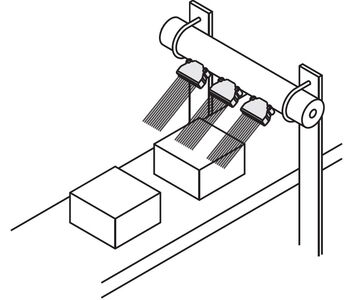

In mechanical engineering, air nozzles are often used directly after machining processes such as milling or drilling, in order to quickly cool workpieces using flat jet nozzles and to quickly continue processing without thermal deformation. Air nozzles also provide valuable services in plant construction: Components originating from, for example, furnace systems or thermal coating processes are abruptly cooled with spot nozzles or compressed air rings to obtain defined material properties. Finally, in conveyor technology, air nozzles along transport routes ensure a purposeful temperature adjustment of hot components, for example, before packaging, quality control, or the next production step. Note that cleaning or cooling with compressed air can lead to increased noise levels.
Cooling with spray nozzles
Spray nozzles are used when more intensive liquid cooling is required - usually in the form of water, emulsions or coolants. Atomization creates a fine fluid film that dissipates heat and also reduces friction. Spray nozzles can evenly wet surfaces or selectively cool individual zones.
In mechanical engineering, spray nozzles are used, for example, during grinding or milling, in order to guide the coolant in a purposeful manner to the severely heated cutting zone. Spray nozzles also provide continuous cooling of workpieces and clamping devices in plant construction, such as welding robots or thermal cutting systems, in order to avoid thermal stresses and deformations. In conveyor technology, spray nozzles are used, for example, in cooling sections of hardening processes, where they ensure a defined and uniform cooling profile. A positive side effect is the low noise level during cooling with spray nozzles.
Nozzles as a function of the cooling medium
Various cooling media are available for industrial cooling, including compressed air, water, oil, emulsions, or special cooling fluids. They are fed to the nozzle via a system of hoses, pipes or lines. Choosing the right medium depends on the application, material requirements, and operating conditions. However, the question of which nozzle is suited for which cooling medium is just as crucial as the selection of the medium since not every nozzle is designed for every medium and every temperature.
In particular, material quality and chemical as well as thermal resistance play a central role in selecting the appropriate nozzle. For example, nozzles operating with aggressive or oily coolants must be corrosion-resistant, e.g. made of stainless steel, brass or special plastics. Even at high temperatures, such as those found in thermal processes, the nozzle and seals must be appropriately heat-resistant to ensure long-term and reliable operation.


Another aspect is the viscosity of the cooling medium used: While compressed air does not impose special requirements on the nozzle cross-section, nozzles for viscous liquids such as oils must have correspondingly adapted geometries to avoid clogging and uneven jets. The atomization properties also differ significantly depending on the medium - fine spray patterns are easier to achieve with water than with viscous media, for example.
Use of nozzles for cleaning in production
Whether after machining, thermal treatment or during transport, workpieces may be contaminated with chips, emulsions, coolants or other production residue. To remove these in a purposeful and efficient manner, nozzles are used that precisely apply cleaning media - such as water, cleaning agents or compressed air - to the affected surfaces or areas. The following must be observed: If the cleaning fluids are reused and are in a closed loop, the fluids should only be used when filtered. This prevents nozzles from clogging and protects the cleaning process.
Cleaning with air nozzles
Air nozzles are primarily used where dry cleaning is desired – such as blowing off chips, liquid residues or fine particles. They produce concentrated or flat air jets, depending on the design.
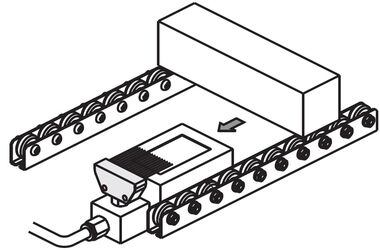

Flat jet nozzles allow even blowing off of entire surfaces, for example after wet cleaning or in final inspection. Conversely, spot air nozzles or nozzle tubes are ideal for removing machining residue from deep bores, grooves or recesses. The nozzle tube can be inserted directly into the opening and precisely positioned.
Cleaning with spray nozzles
Spray nozzles are mainly used for wet cleaning - either with clear water, with the addition of cleaning agents or with coolant emulsions. Depending on the application, different spray patterns are available.
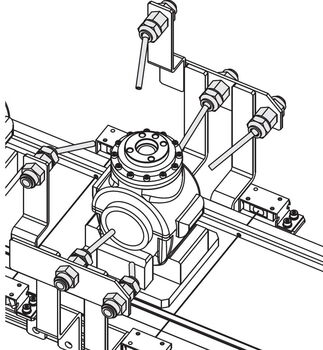
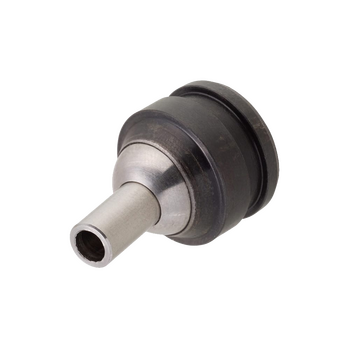
Full-cone nozzles or hollow-cone nozzles allow for uniform but finer wetting, for example to remove cutting fluids. Point spray nozzles with a concentrated jet are used to specifically flush contaminants from bores, notches or gaps. They deliver high cleaning efficiency with minimal area requirement.
Whether for cooling, cleaning, drying or wetting: Nozzles are essential tools in industrial manufacturing. By selecting the right nozzle technology, adapted to the medium, jet shape, spray angle and application environment, processes can be made more efficient and precise. While air nozzles are ideal for dry, pin-point applications such as blowing or drying, spray nozzles allow finely dosed fluid application, such as for cooling or cleaning sensitive workpieces. With a well-designed system of nozzles, hoses, lines, control valves and brackets, the media supply can be precisely adapted to the requirements. Thus, the purposeful use of nozzles plays a crucial role in ensuring product quality, optimizing machine uptime and reducing operating costs.