Currently there are no notifications.
MISUMI Linear Ball Bearings with Flange
Changed connection method of flange and bearing outer cylinder (from brazing to glueing)
1. Description of the change:
For some of our linear ball bearings with flange, the connection method between the flange and the bearing outer cylinder has been changed from soldering to gluing.
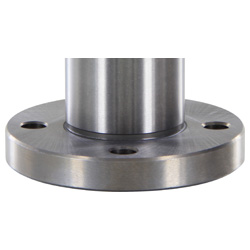
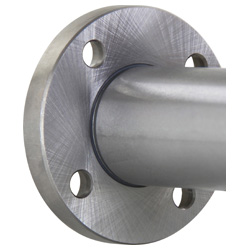
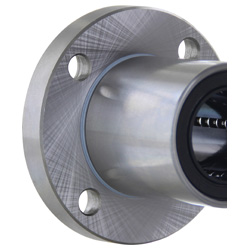
Due to the modified joining method, a milky white adhesive seam remains at the joint between the flange and the bearing outer cylinder. The appearance of the adhesive seam may vary depending on the size and shape, but this does not affect the properties or compliance with the specifications.
| Changes Examples for the appearance | Front view | Side view | Rear view |
|---|---|---|---|
| Brazing | 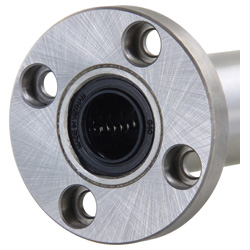 |
 |
 |
| Bonding (Case 1 - small diameter /[dr] inner diameter = 12 mm) | 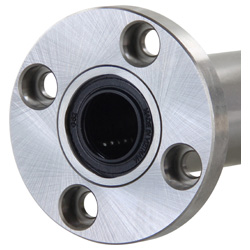 |
 |
 |
| Bonding (Case 2 - large diameter / [dr] inner diameter = 20 mm) | 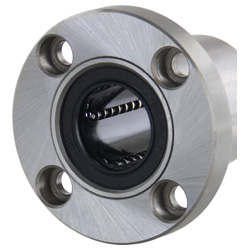 |
 |
 |
2. Features / specifications:
The currently applicable specifications continue to be met and are unchanged. The currently valid specifications can be found on the MISUMI website and in the catalogue.
3. Overview of part numbers with changed connection method:
4. Entry into force of the amendment:
It is possible that your delivery contains products in mixed connection method, i.e. with both soldered and bonded connection between flange and bearing outer cylinder. Deliveries of products with the new bonded connection method or deliveries with mixed connection method designs do not constitute grounds for complaint and are therefore excluded from exchange.
5. Reference information:
a. Adhesive
One-component epoxy resin adhesives from 3M® are used.
b. Heat, oil and chemical resistance:
Compliance with existing specifications and properties has been demonstrated by testing in accordance with JIS K6877 and K6858.
c. Vertical and moment load:
The fulfilment of existing specifications and properties has been demonstrated by means of tests.
d. Resistance to ageing:
The fulfilment of existing specifications and properties was proven by means of tests. The test parts were subjected to an artificial ageing process corresponding to an age of 5 years.